Friday, March 21, 2014

Back from Safari (Photos may take download time)

Yesterday, we returned from five days of safari, a trip both exhilarating and totally fatiguing.  This time, we skipped traveling all the way to Serengeti and focused instead on Tarangire, Manyara, and the Ngorongoro Crater.  Although I regretted that the students missed experiencing the overwhelming vastness of the grasslands in Serengeti, I knew that they would see every animal on their wish lists, plus others they didn't know about.  And that was true for everything except a leopard, an animal which is known to be very difficult to sight.  Tarangire was outstanding for the number of elephants we saw, old ones with enormous tusks to babies with fuzzy heads and tiny trunks.  Many were right beside the road, as though they were posing for photos.  There were also plenty of giraffes, impalas, baboons, monkeys, ostriches, and zebra, as well as different kinds of mongoose.  My favorite thing in this park are the many huge baobab trees.  They can live to be several hundred years old and are massive and beautiful. As we drove out of this park on the way to Lake Manyara, we were incredibly lucky to spot a mother cheetah with three young cubs that she was teaching to hunt. The cubs chased after an impala, but finally had to give up and return to their mother. It was perhaps the most amazing sighting of this particular visit. Unfortunately, John's cheap point-and-shoot camera was not up to capturing this.
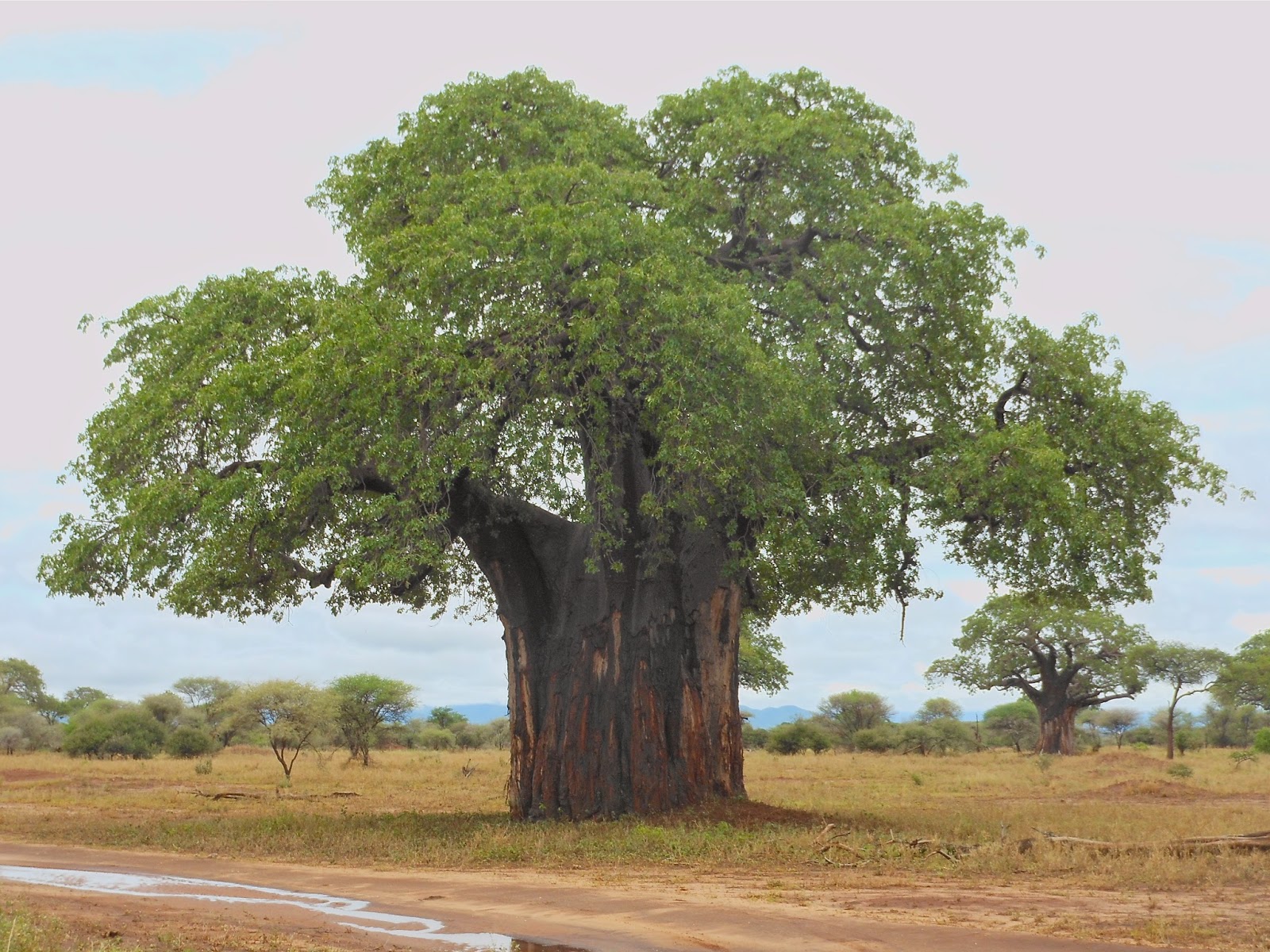
One of hundreds of Baobab trees in Tarangire

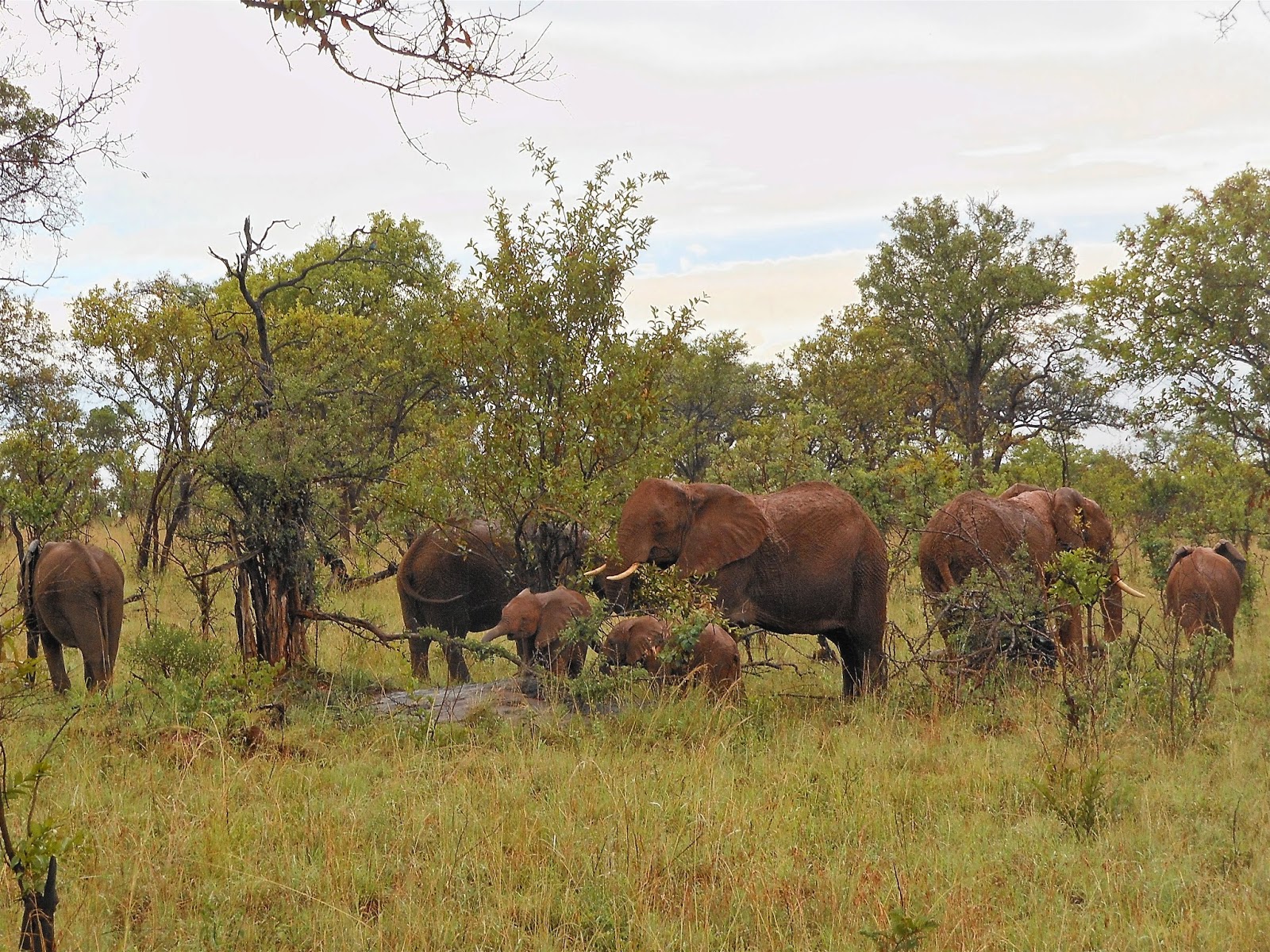
An elephant family

One of many such elephants posing for us.

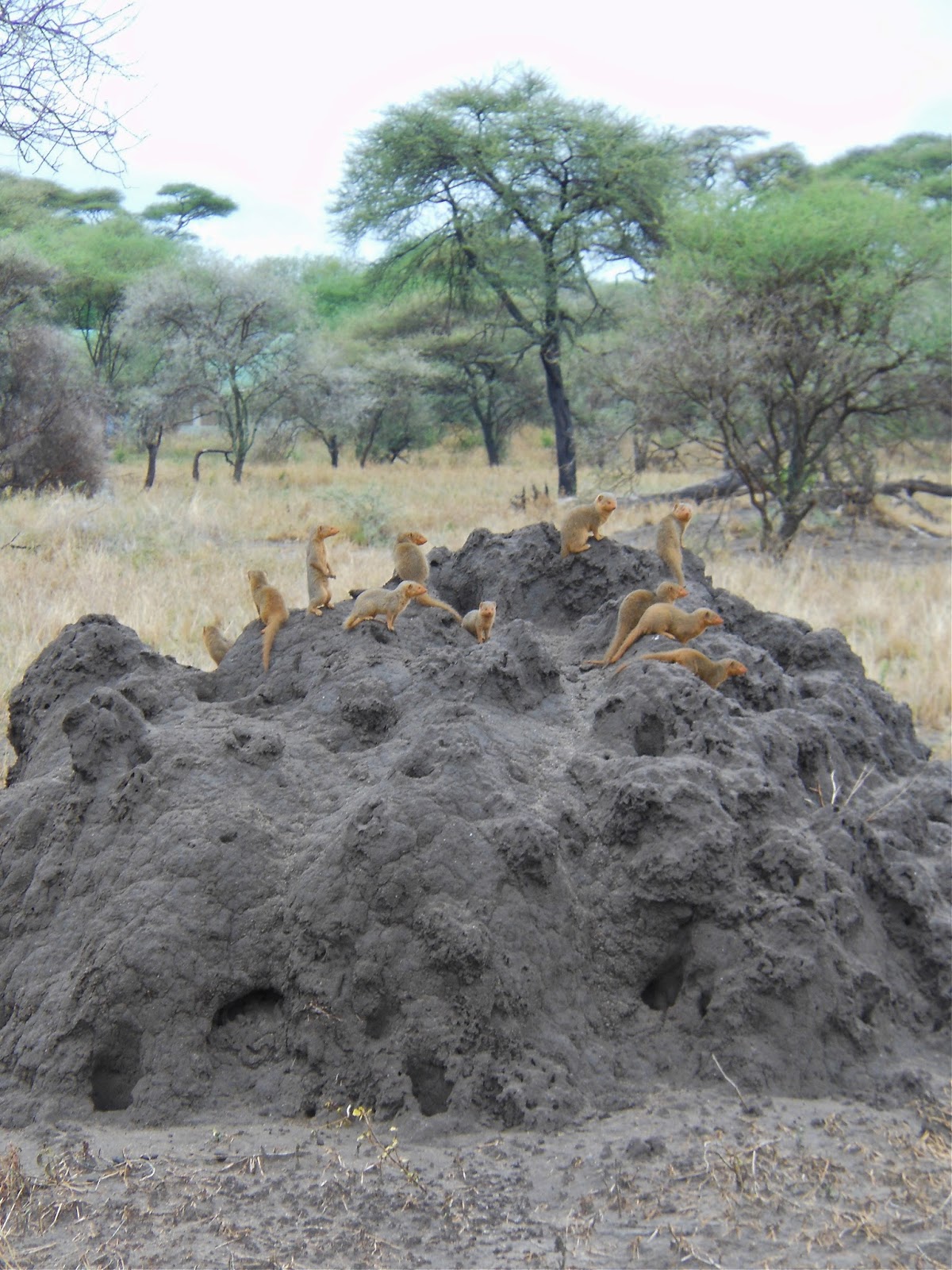
Dwarf mongooses

Lake Manyara has flocks of flamingos, and is also famous for its tree climbing lions.  Strange as it may seem to some, I opted to skip the drive in this park.  Except for the lions up in trees, I had seen all the wonders of Manyara in 2012 and was more inclined toward some quiet time than reviewing the hippos, elephants, and all else once again.  Furthermore, since I had given my camera to a student whose own camera is broken, I wouldn't have been able to take any new photos anyway. The best part for me--in addition to time out--was listening to the students' exclamations about all the incredible animals and views they had seen.
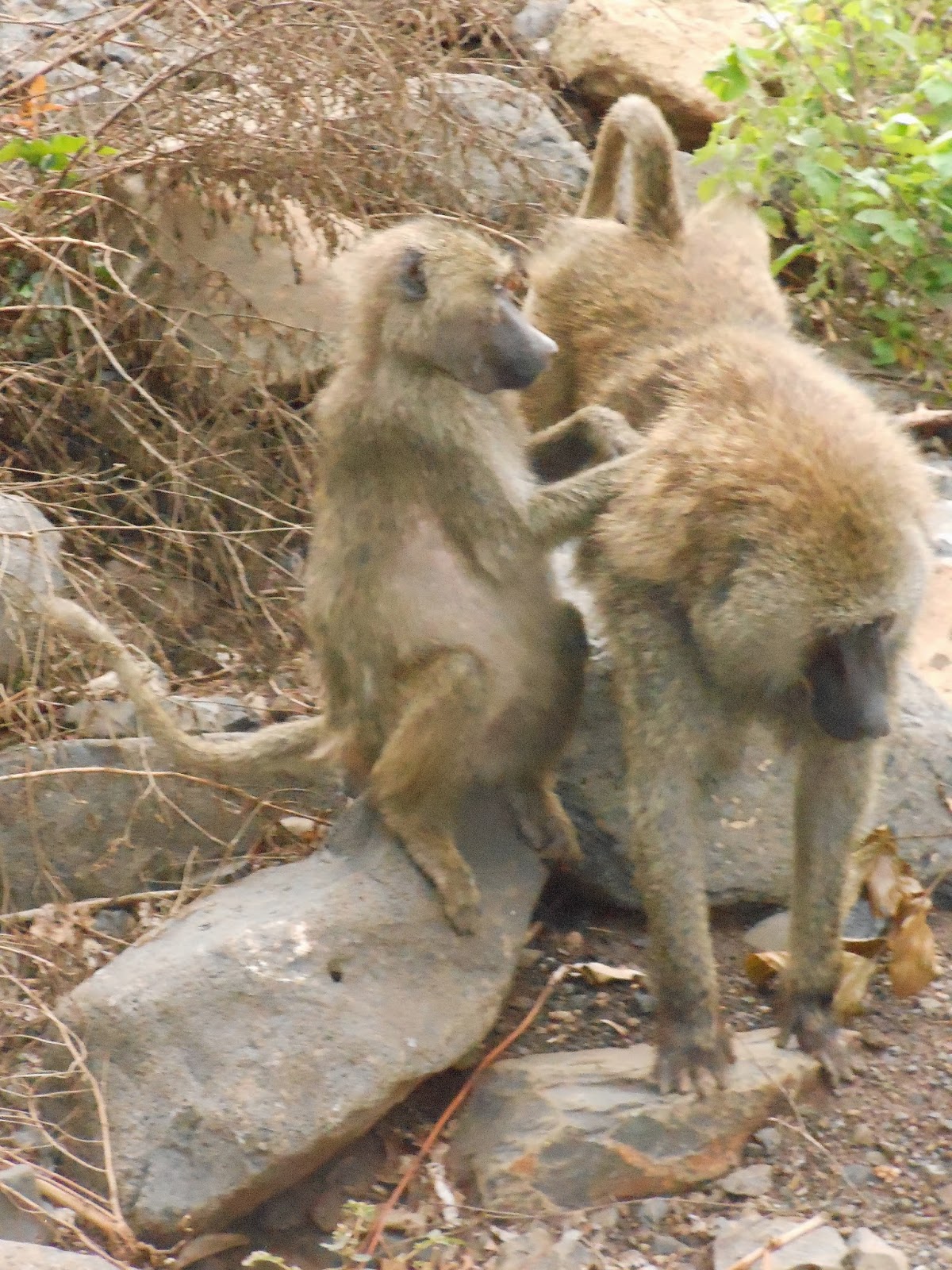
Baboons grooming

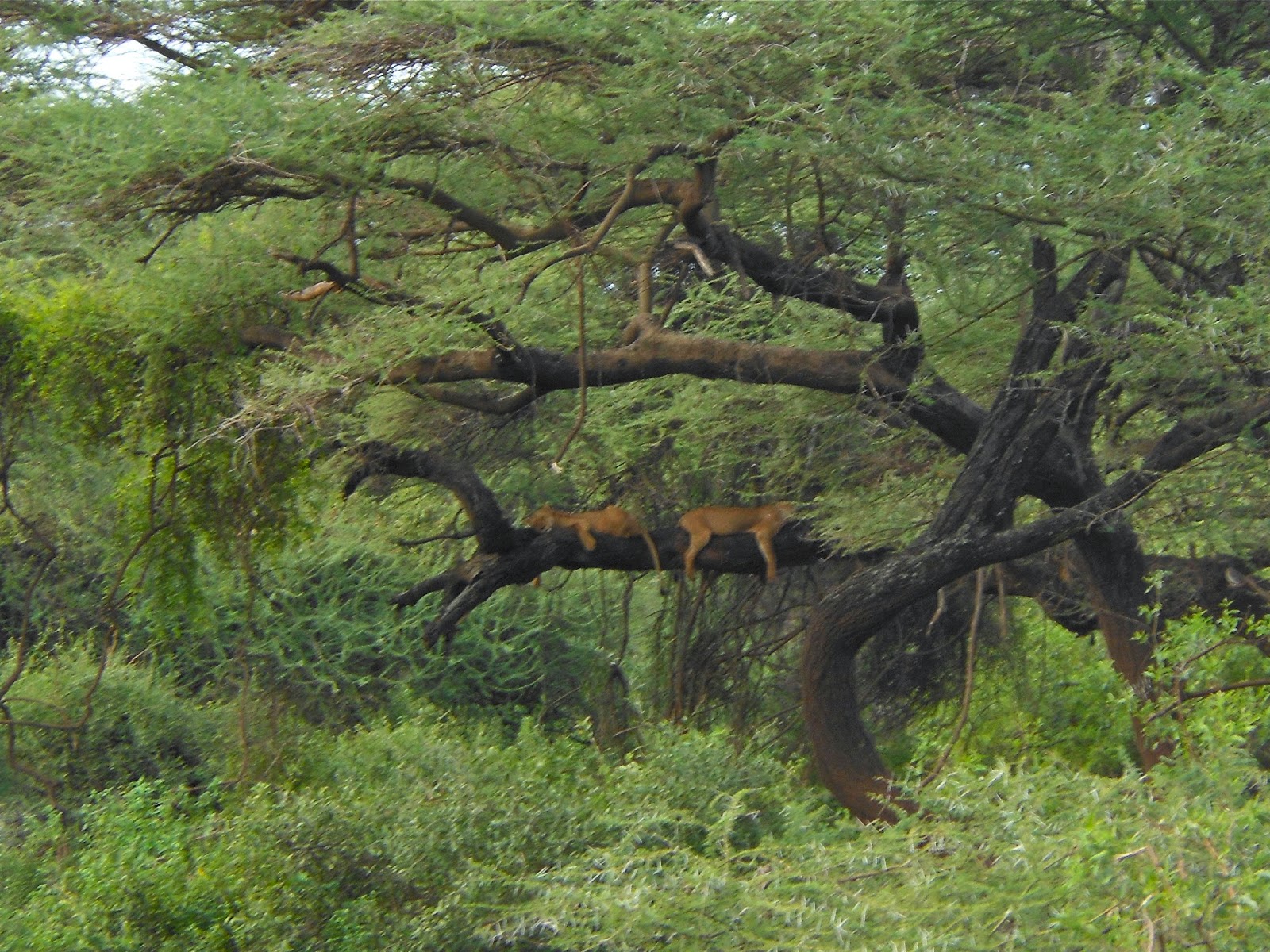
Manyara's tree-climbing lions
Our first night out, at Tarangire, we stayed at a tented camp which is basically geared toward people who go on hot air balloon rides. (http://www.madahotels.com/index.php/tanzania/balloon-camp-tarangire) However, since this is off season, we pretty much had the place to ourselves. The term "tented camp" is misleading because while the units have canvass sides, they are complete which hardwood and tiled floors, western toilets, spacious showers, and king-size beds. There is nothing much akin to camping in such a set-up.  However, because this camp is located within the park boundaries, it has no barriers to keep the animals from wandering wherever they want to go, so after dark, we had to be escorted to our tents by Maasai guards, and there were always several guards on duty along the paths.  One student heard a lion roar during the night, but I apparently slept through it.
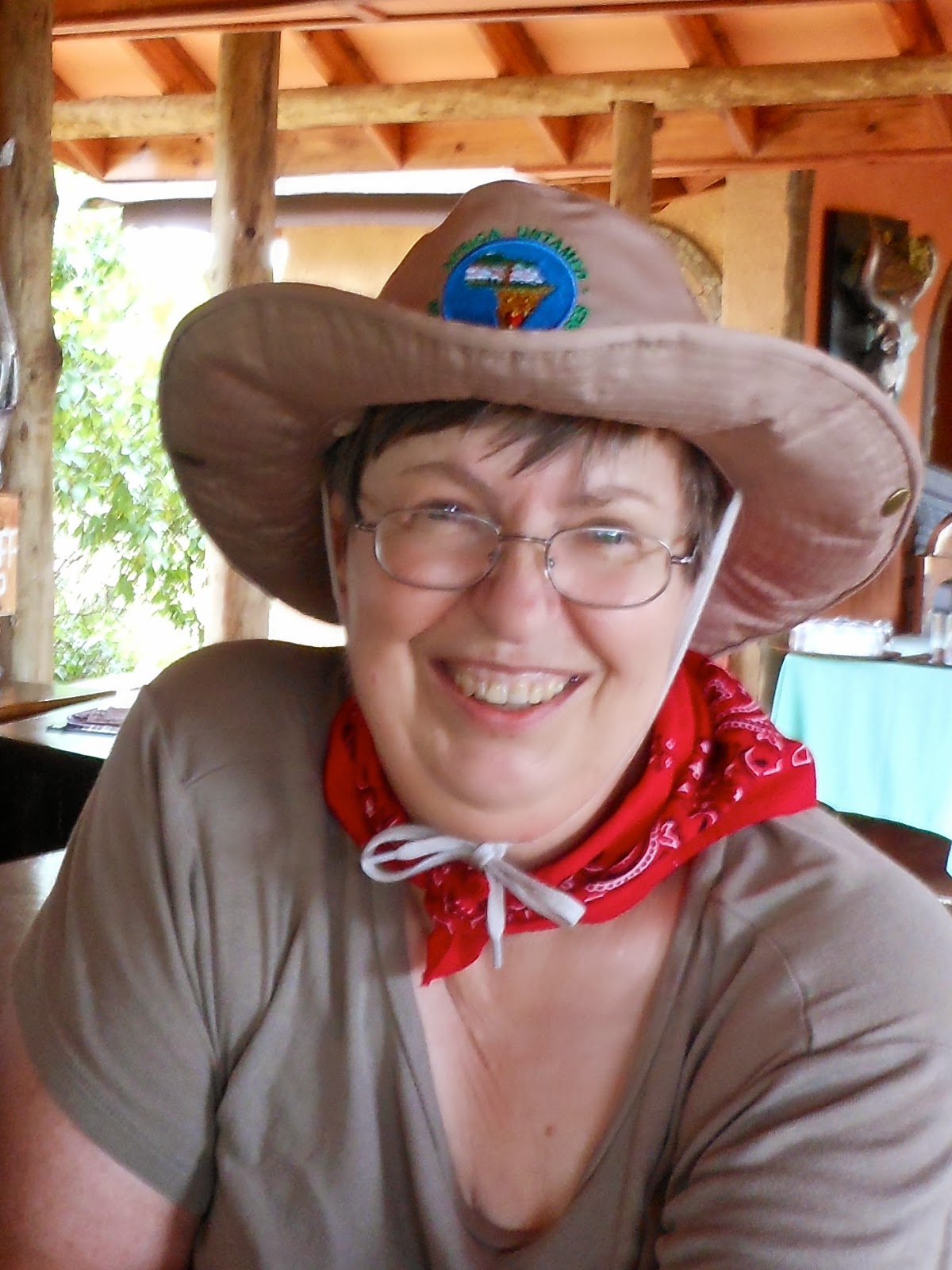
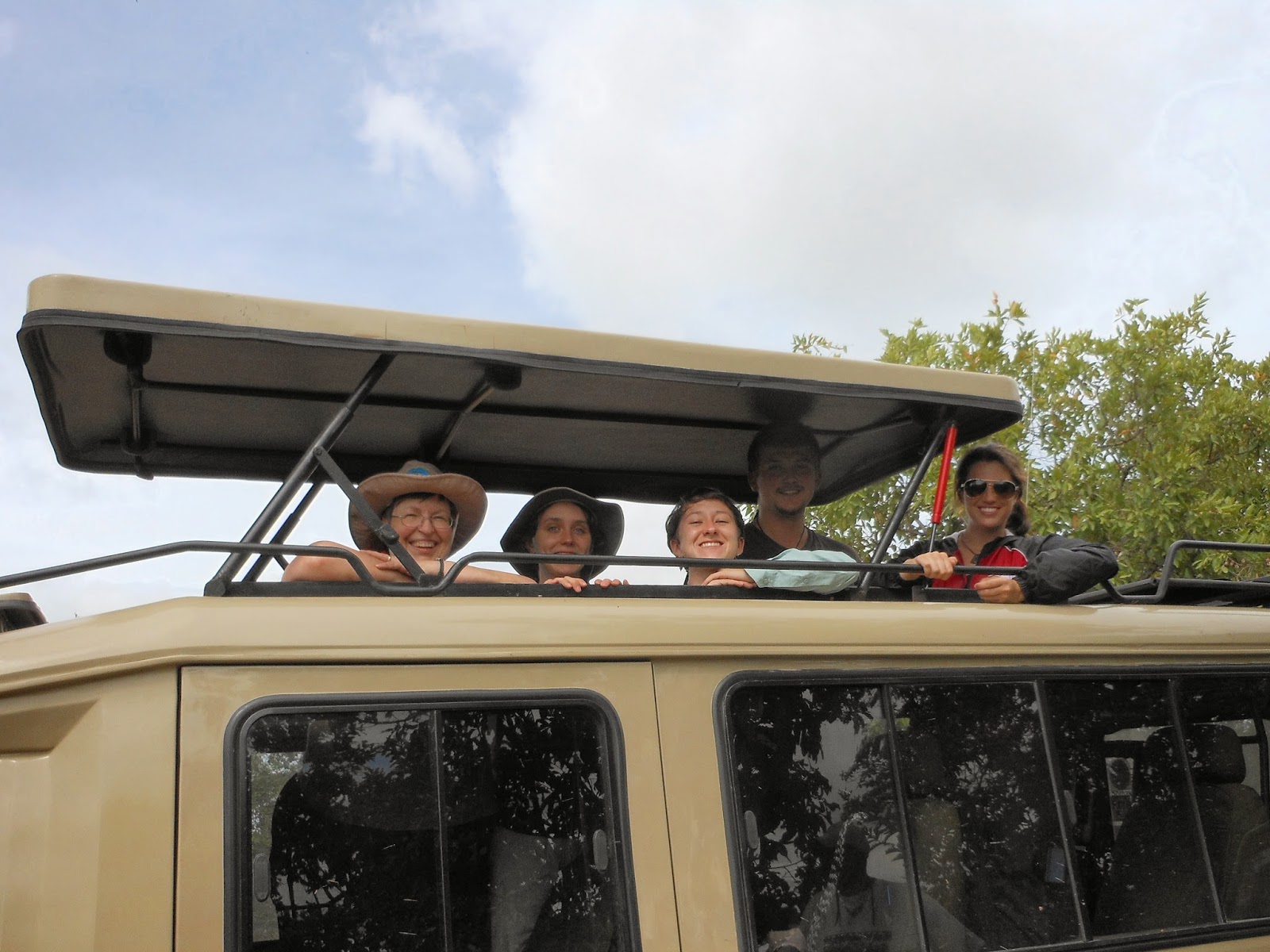
Hatted up and ready to go
At both Manyara and Ngorongoro, we stayed at Serena hotels, which are on the upside of luxury (http://www.serenahotels.com/serenalakemanyara/default-en.html and http://www.serenahotels.com/serenangorongoro/default-en.html) and serve incredible meals in dining rooms with the whole white tablecloths and elaborate service settings appropriate to such places.   Fortunately, we have wonderful Kenyan/Tanzanian travel agents who can get incredible deals for us during off-season. In fact, because we all have resident visas Class C now, we got the Tanzanian rate for entry into the first two parks. Ngorongoro is a conservation area and thus operates under different rules, so we had to pay the much higher foreigner fee there.  Still, this safari cost the students a fraction of what it will if they ever try to repeat it in the future.  (The entire safari of 5 days and 4 nights, with all transportation, guides, meals, upscale lodging, tips, etc. cost only about $1,300 per person.) And, as some noted at the Ngorongoro Serena Hotel, they may never again stay in such luxurious accommodations. I have very mixed feelings about placing the students in such a setting, but they did get to observe and comment on the usual clientele at these places and the whole affect the tourist/service industry has on local residents.  The head of our travel agency's Nairobi office, Elphas, was traveling with us and sat with us for dinner each evening, and he was a wonderful asset in responding to student questions.  In addition, our driver/guides were extremely knowledgeable and wonderful with the students, too.

Elphas at dinner with us

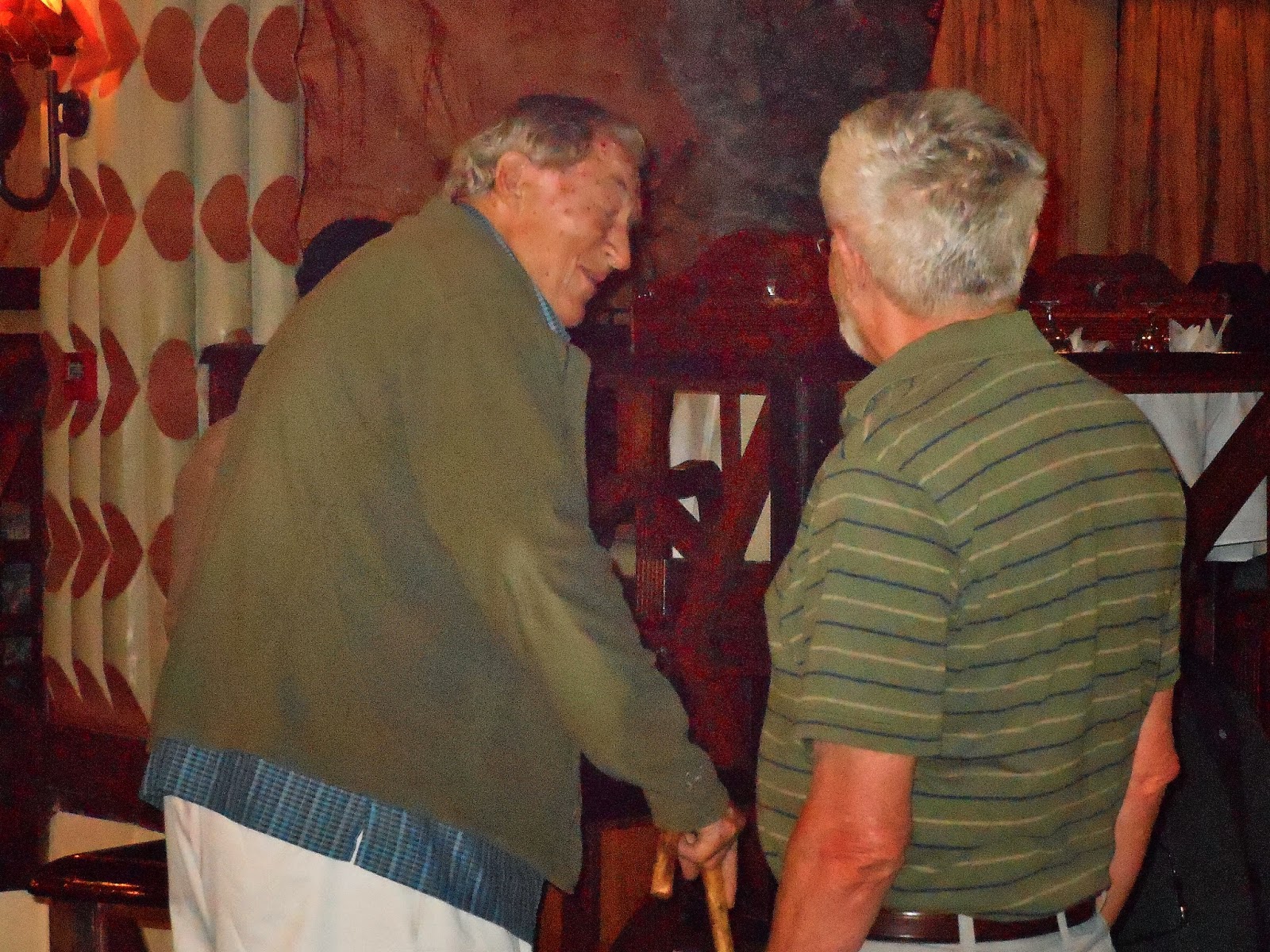
On the way to Ngorongoro,  I was dropped off at the Serena Lodge while the rest of the group went on to stop visit Olduvai Gorge, where the oldest footprints of early hominoids were found not many years ago. (http://en.wikipedia.org/wiki/Olduvai_Gorge) Since I can't hike up and down in canyons, I had decided to sit this out and find a place to read for a while before the group returned for a late lunch and checked in. It was particularly great that the students had been to Olduvai when it turned out that Richard Leakey himself--and his brother Phillip--were also staying at the lodge. When the students realized who was eating dinner in the same dining room with them, they were totally star-struck.  John, however, walked over and had a short chat with him.  One of the students was brave enough to snap a photo for me.
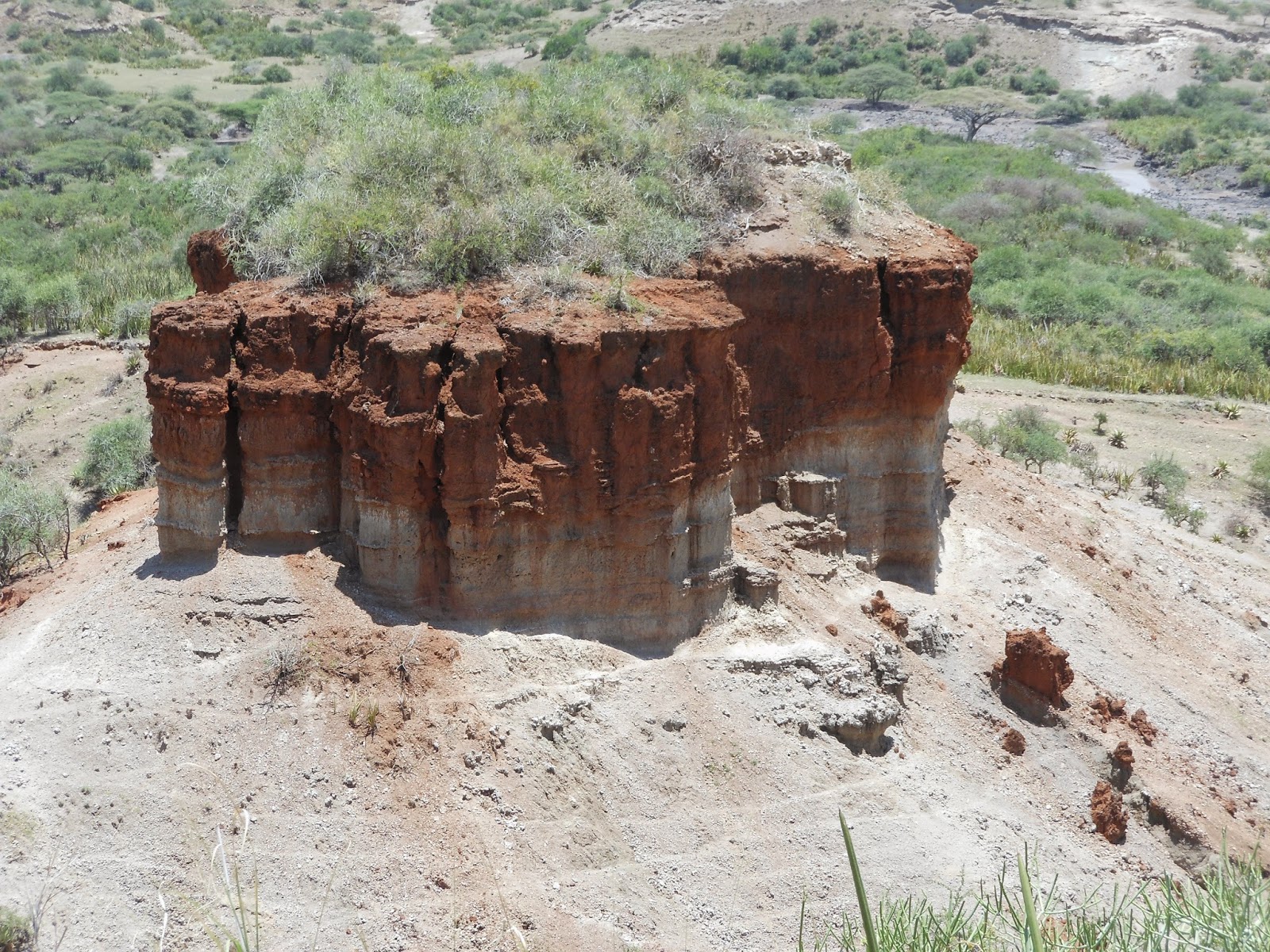
Olduvai gorge, a very barren and hot spot

John chatting with Richard Leakey
 The following morning, we all got up early in order to have a full day of viewing the animals in the Ngorongoro Conservation Area, which is a giant volcanic crater the bottom of which is now a vast plain full of wildlife. It took us well over an hour just to drive down into the crater, and then we spent 7 hours driving all around and through it.  On this drive, we saw countless zebras, wildebeests, buffaloes, hyenas, hippos, gazelles, and lions, as well as numerous types of birds. I kept thinking of friends who have excellent cameras and photographic skills and wishing they were with us to take the photos I never could.  Two of our students have very good cameras, so I am hoping they will be willing to share some of their shots with me.  John did get some good photos of a zebra scratching his stomach on a big rock.  I had never seen anything like this before: a tool using zebra!  One of my favorite sights of the day was watching a very young lion cub--maybe only two-weeks-old--nursing.  John tried to get some photos of this, but the mother wanted to lie in the shade of our vehicle, making it almost impossible to get any decent photo of the two of them.  Of course, we had to keep all our windows closed, too, whenever we were any place near lions.  Most of the lions we saw were just lying sprawled out having naps instead of doing any exciting wild beast actions.  As the following photos show, the rainy season has begun, and many of the animals were focused on keeping cool in the mid-day sun.

Zebra using a rock to scratch its stomach

Warthog cooling off in the mud

Mother lion nursing her cub

Searching for the Big Five
Very lazy lions

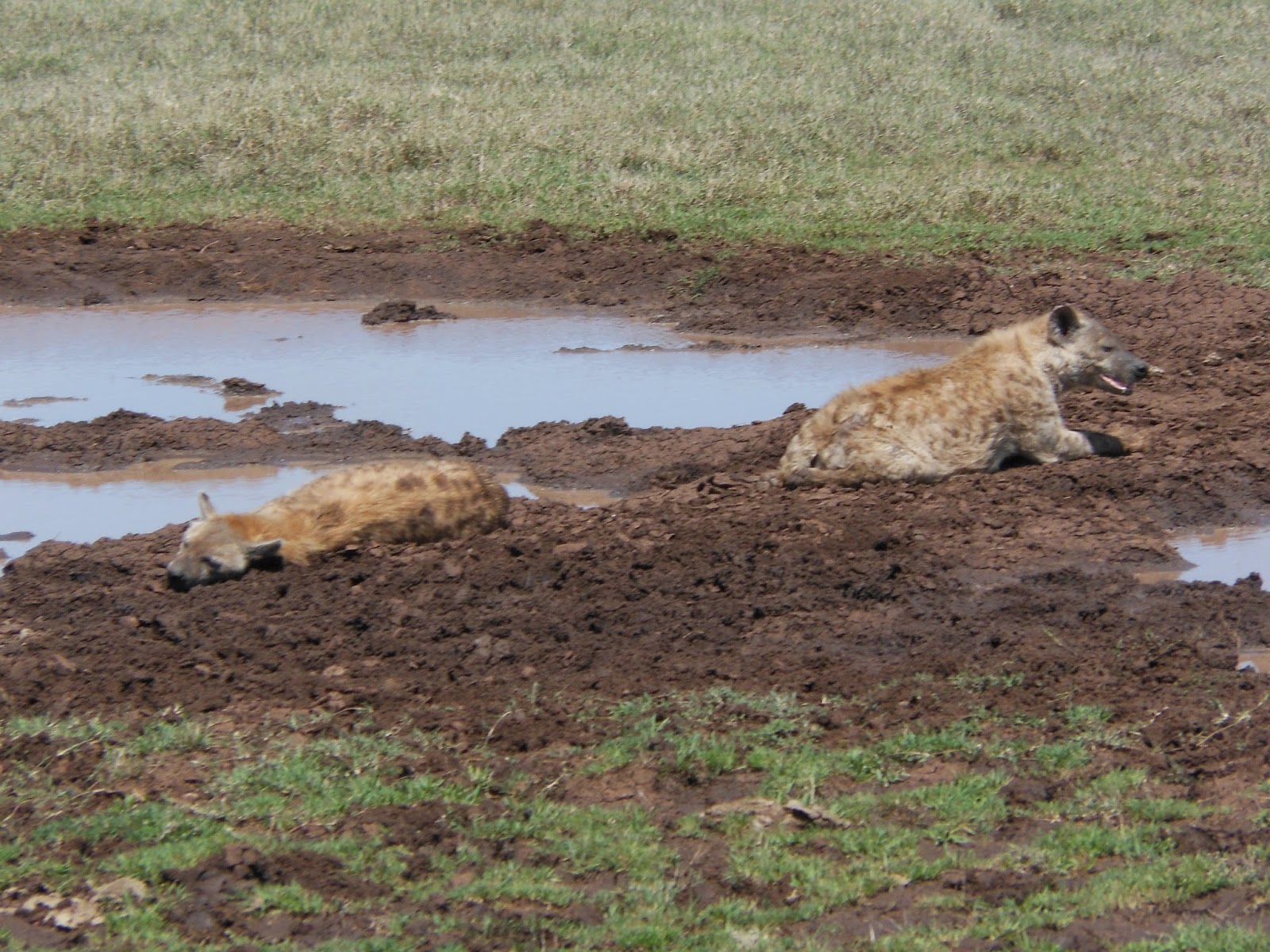
Hyenas enjoying some mud therapy

At about 3:00 p.m. we headed back up out of the crater, and this time it took us almost to hours to get back to our hotel, as we had to return from the far side of the crater.  The students were exhausted, and those in our vehicle, and I assume the others, slept during the entire ride back. We were spending a second night at this Serena lodge, and once again at dinner had a celebrity sighting.  This time it was Anthony Bourdain, who was at Ngorongoro with his crew for a show they were going to tape the next day.  A couple of students approached him to say how much they enjoyed his show, but he was less than gracious with them.  So, I sent him evil thoughts all during dinner.  Still, the students were very impressed that they were staying in a hotel where celebrities also stayed.
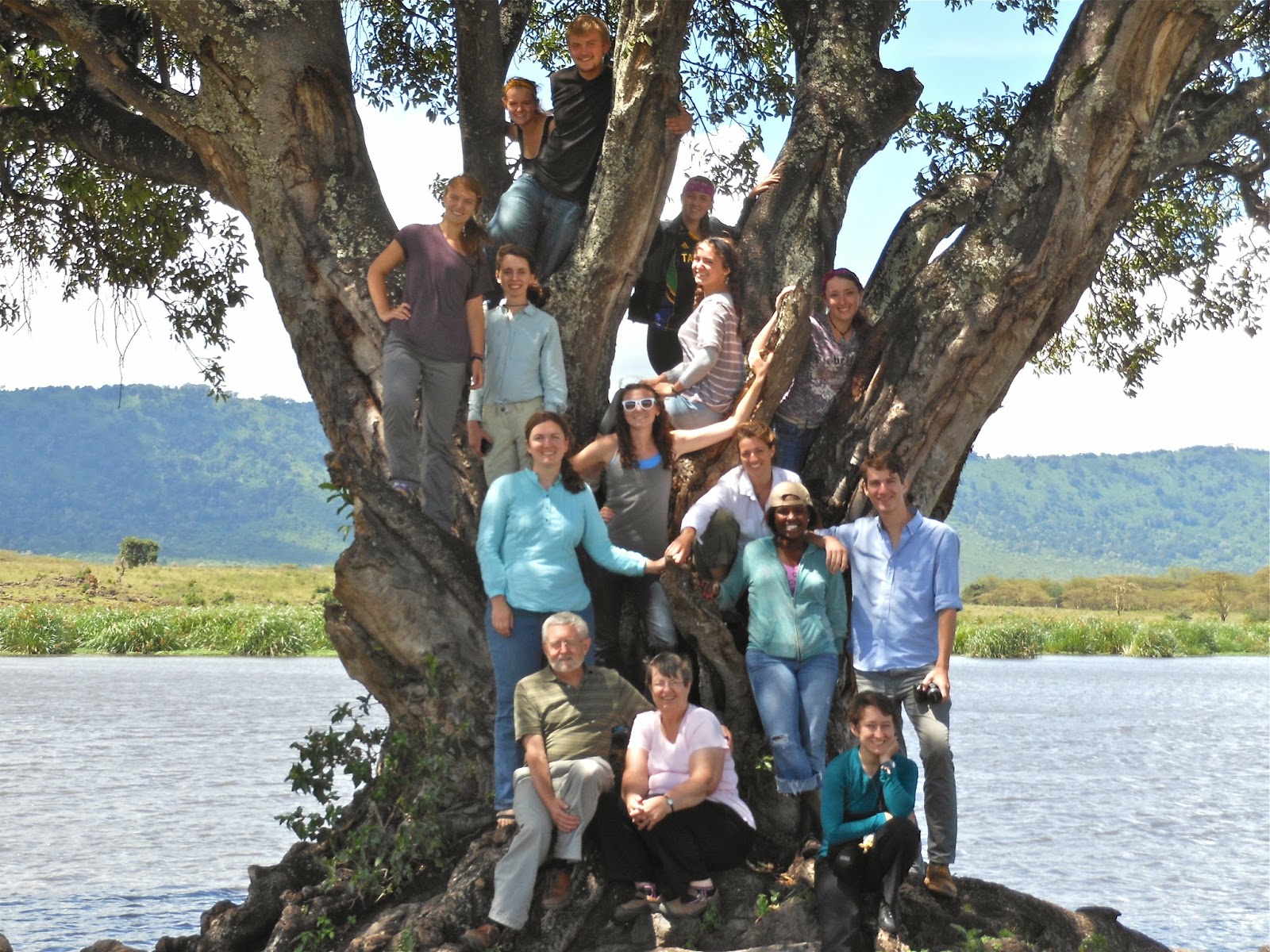
Up a tree in the Ngorongoro Crater
The following day, Tuesday, we had to return to reality and drive back to Arusha.  We stopped several times at viewpoints for photos and bathroom breaks, and the drive back through Maasai territory was very interesting, too.  But, the students were tired, and in between stops the students again slept and missed most of what I wished they had been awake to see, too.  This is another source of question for me: Why do students stay up late testing, Skyping, or being silly and then sleep through much of what they should be seeing and absorbing in such a different country and culture?  I've actually thought about getting a big air horn with which I could blast them from time to time.  They are paying a lot of money for this program, and yet they waste so many learning opportunities with poor time management and an addiction to electronics. I actually had to announce a "rule" that no electronic devices would be allowed at meals because it it rude to ignore others at the table while hooked up to an iPad smart phone.  Why this wouldn't be obvious to all is another mystery to me.
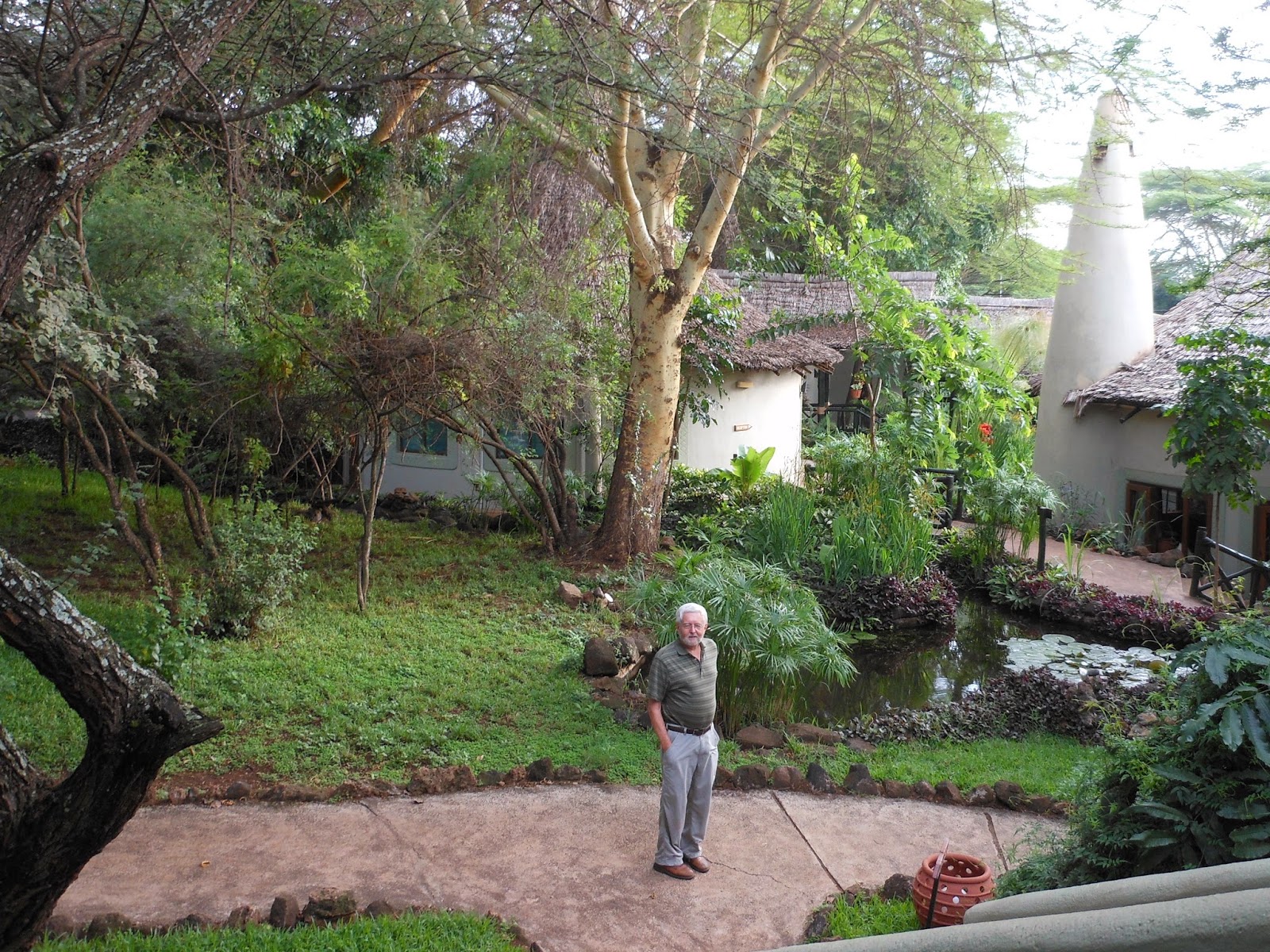
John at the Manyara Serena Lodge
 Once again, it was wonderful to return to Kundayo though it was sad to say good-bye to the three driver/guides who had taken such care of us on the roads and in the game parks.  While the students waited here for their host families to come and take them to their homes again, John and Megan met with them to go over assignments and answer any questions they might have about their field notes, journals, and policy papers.  I unloaded our suitcases and got our very dirty clothes ready for laundering.  All of Johns trousers and polo shirts went to Kundayo's laundry service, but I got busy and began hand-washing all our socks, underwear, and tee-shirts.  That task continued well into Wednesday.
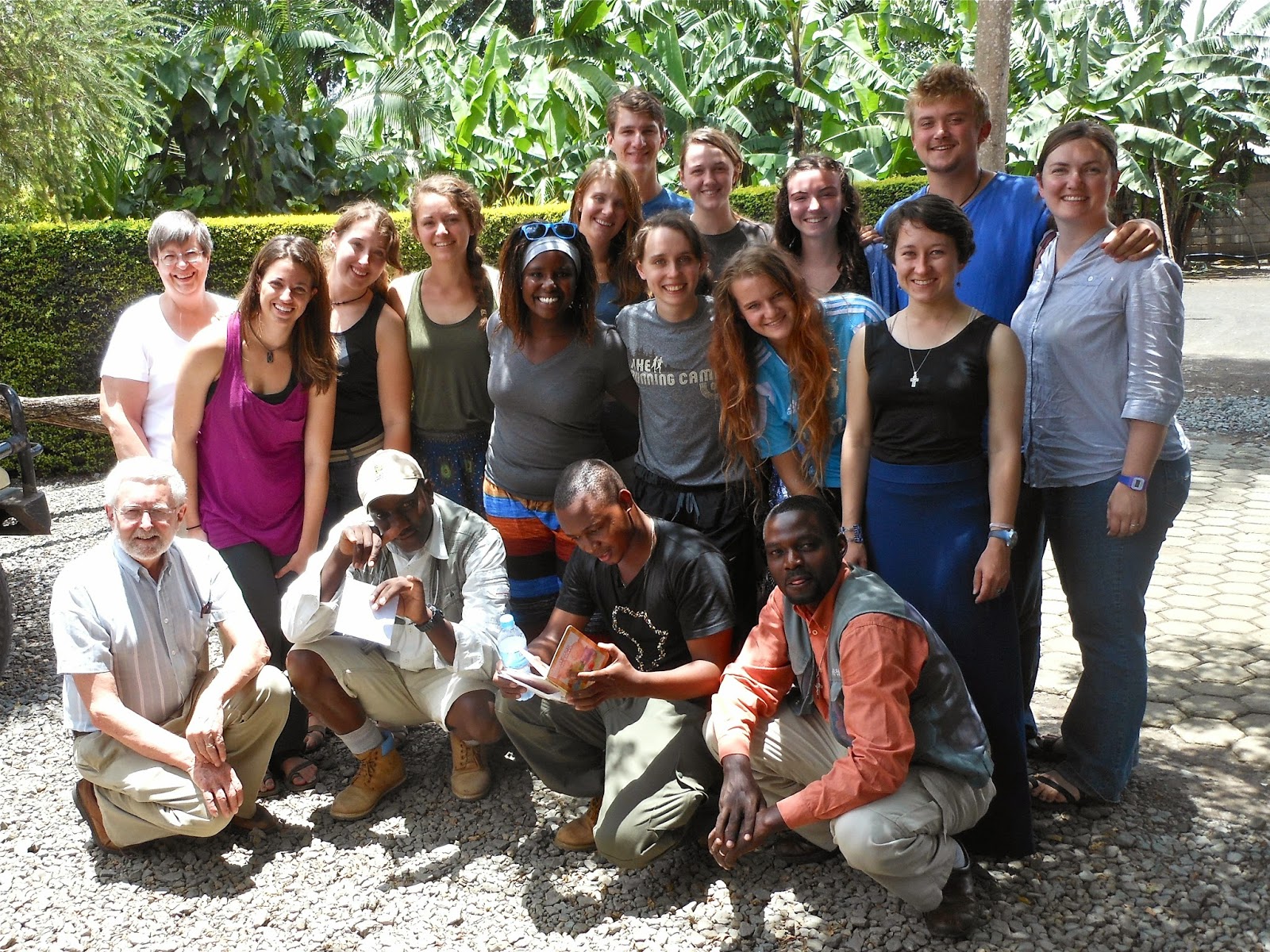
Back again at Kundayo.


Wednesday, March 12, 2014

Catching Up

So, it's been a while since I last posted anything on this blog, almost two weeks, in fact.  So much has happened so quickly in this time that I feel as if I am in a fast-forward phase of the Tanzanian experience.  I was already beginning to notice while yet on Zanzibar how much the thought that I will likely never return to see and experience  all the wonders and people of this exceptional country again was foremost in my thoughts.  Whenever, I passed a street vendor, peeked into a small dark store, walked down a narrow cobblestone street, played with Fahdila's children, rode the Kiembe Samamki daladala home, drank the superb coffee at Kilimanjaro III, or ate another meal of roasted fish, I thought, "This may be the last time."  It was if everything I saw was emphatically outlined in black, just as I used to outline the completed drawings in my coloring books when I was a child.  The color saturation is on high, and the focus is so sharp it cuts deep engravings in my mind.  I love this country more than all the other 36 or so I have visited or stayed in.

And now, we have been back in Arusha for almost two weeks, and the days continue to zoom past so full of color, noise, and even smells that my mind cannot capture them quickly enough.  The relative coolness of Arusha compared to Zanzibar is an enormous relief.  The comfort and quietness of the Kundayo Apartments are soothing.  Reuniting with our friends here--especially Ray and his family--is deeply satisfying.  Yet, behind all the joy and contentment is my awareness that this too will change all too soon.  If I could have any wish, I would wish that I were once again 22 and just beginning my love-hate relationship with Africa--though I would somehow want to avoid erasing the fantastical experiences of the past 40 years.

The students have all begun their internships, and there is a much better range of places where they have been placed than we had in 2012.  This time, the assignments range from working with the local ASPCA, doing donkey and dog clinics and vaccinations, to researching for Carbon Tanzania, a carbon offset organization.  In between, are Elimu Community Light, Inherit Your Rights, Compassion, the African Cultural Heritage Center, and Juvenile Detention. Best of all, each student loves his or her placement and is actively learning not only about the specific focus of an organization but also about the undercurrents and problems which occur in operating an NGO.  I envy their opportunities to learn so much that can never be taught in a classroom.

For the weekend, we traveled to Longido for a visit to a Maasai boma (family group).  Elizabeth, whom we had met on this same trip in 2012, made all the arrangements since it is her father's boma, and her mother, siblings, aunts, and cousins live there.  Seeing the vast differences between Elizabeth's life as a university graduate and the life of her extended family, which still lives a traditional nomadic life, makes me wonder how a person can change so much and yet slip seamlessly back into a lifestyle hundreds of years old.  Saturday was spent doing almost nothing except sitting will the people, watching a goat killed and roasted in our honor, petting the many donkeys and calves, and holding silky soft baby goats. One of the major activities was frantically beating off the zillions of flies.  With improved rains, came more animals and prosperity, which means much more poop and accompanying flies. My major accomplishment for the day was swallowing only one fly. Unfortunately, my camera battery went dead, so I was unable to photograph much of this inaction.

Elizabeth introducing us to her family

Tea time at the boma

Young warrior who helped with killing the goat for us

The boma and Mount Longido

Carrying in our gifts

Cuddling baby goats
Then, as evening fell, we adults went back into Longido to spend the night in the Lutheran guesthouse there, leaving all the students to spend the  night in the boma, where they would sleep on the ground in a dung plastered hut with only a cow skin "mattress."  Elizabeth had made certain that the evening meal would be good and filling and even have vegetables, which the Maasai traditionally do not eat. Except for being very cold and needing to huddle together like a litter of kittens for warmth, the students had a great time.
Elizabeth and her son, Osi
Sunday morning, our bus driver picked up the students and brought them into the guesthouse for breakfast and showers before we went back for church at the same Lutheran church we had attended in 2012.  This time, however, there was no excitement with a sheep being led into the church mid-service, but two baby goats, one pure black and one pure white, wandered inside and all over the altar area before exiting out the front entrance. No one paid any attention to them.  The audience was mainly female, but the choir had men in it and the beauty of Maasai singing was simply ethereal.  I thought about how the Maasai have no musical instruments, and how their voices replace the need for accompaniment, even with drums.

Just before we reached the church, the students spied a mother dog with a litter of very young puppies, and the minute the bus stopped, most of them went straight to the dogs.  There were 11 puppies in the litter, enough for everyone to hold and cuddle several.  It's been interesting for me to observe how much time the students spend taking pictures of themselves and themselves with animals.  Perhaps they do take photos of other people and the scenery, but if so, I haven't seen them do it.  It's selfies and groups making strange faces and gestures for the most part.  Their whole worldview centers so tightly on themselves that I wonder if even the intensity of these months can shake and break down some of their self-obsession.  And, I should not get started on the topic of how entitled some students feel:  they will argue that they deserve an "A" even though they do not do excellent work.  I'm not a sciologist, but I think that there is far too much emphasis on making a child believe he/she is "special" even if he/she is a perfectly lovely yet ordinary child.

Sunday night, after we had returned from Longido, one of the host families had all of us to their home for a dinner party.  It was a lavish affair with tables set up in the courtyard and a catered buffet dinner.  We all enjoyed the excellent food, happy conversations, and eventually dancing.  The family's Bibi (grandmother) even pulled me into the dancing, and we did a bit of bootie shaking together. Then, in honor of a student's birthday, there was an elaborate cake--a really exceptional way to end a very, very, generous gift of friendship.
Buffet line

At our tables

Birthday girl and cake

The cake!

Ready to dance
Dancing with the chefs
Now, we're half way through another week in Arusha, and on Friday morning, we will leave on safari for  five days.  Having visited many game parks in several different countries, I'm not so interested in seeing more of the same animals again as I am in watching how excited and happy the students are when they see their first giraffes, lions, zebras, and wildebeests.  Our travel agent here somehow manages to book us in Serena hotels, which are the top lodges at the parks, so the students get a few days of true luxury, too.  It must seem like a fairy tale come true to them.

For now, I will focus on eradicating the last vestiges of the cold I have had this week.  I want to be at my best when we leave for Ngorongoro Friday morning.


Monday, March 3, 2014

Swahili Women

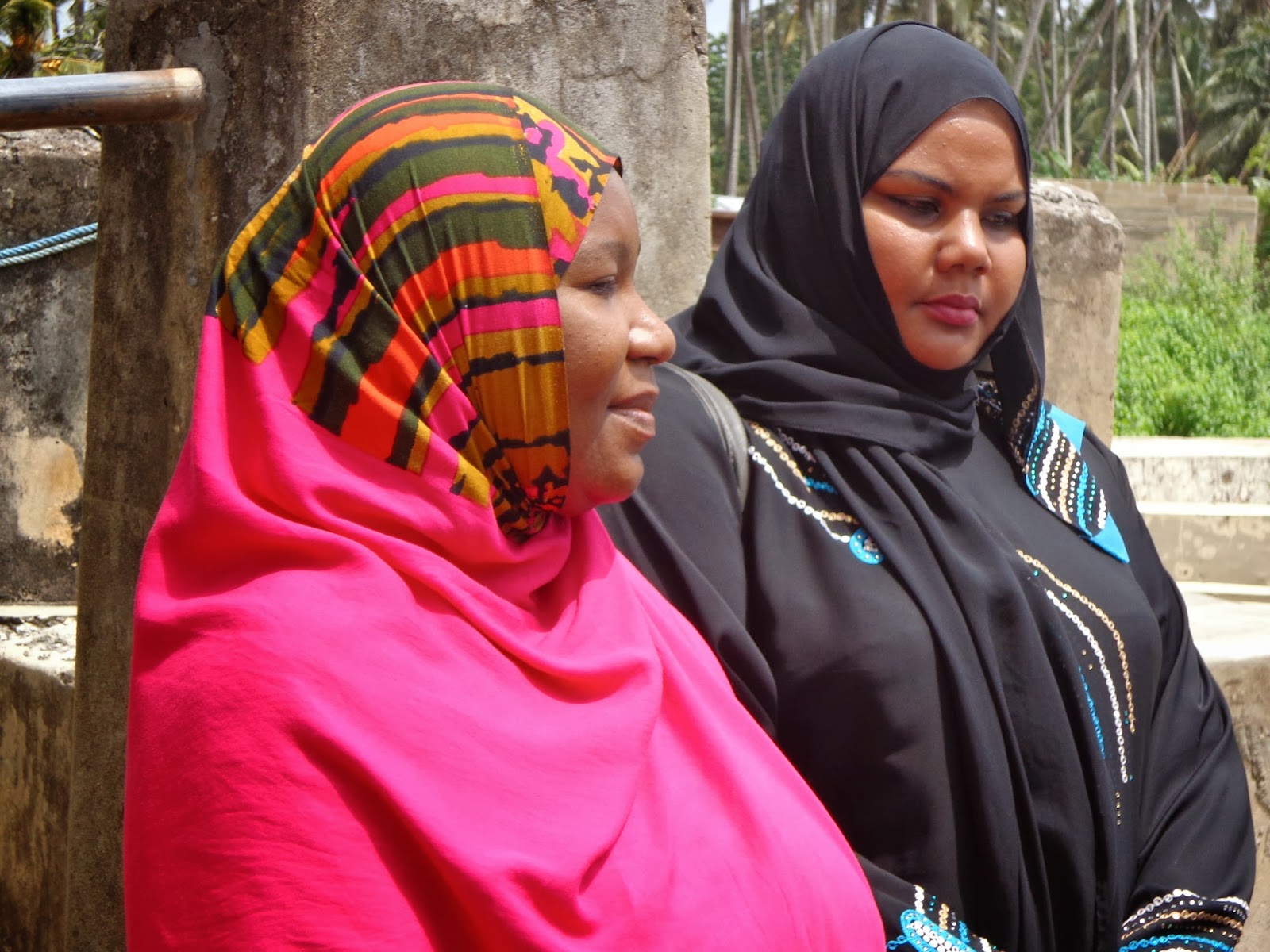
I don't think I should make a generalization about what Americans think when they see a Muslim woman covered in black from head to toe, but I will venture that most, if not all, of us do not think of liberated or feminist.  However, the Swahili women of Zanzibar are some of the strongest and most independent women there are.  Our students are often surprised to find that many of their host mothers live without a husband at home and have often divorced two or three husbands.  Even Fahdila divorced her first husband, though she has never told me why or any details of that first marriage.  The only reason a Swahili woman will stay in an unhappy marriage is if she has not accumulated enough of her own property to live independently.

Take Fahdila for example.  She lives in a very nice upper-middle class home with her children while her husband, Hamad, works over  on the mainland and returns home maybe only one or two weekends a month.  When this house was built 5 or 6 years ago, a small shop was built right in front of the compound wall so that Fahdila could operate an auto parts business, specializing in front ends.
In addition, before she married Hamad, she had also built a very nice house, which she owns herself and rents out for extra income.  And now, she has opened a new restaurant near the airport to cater to the airport workers and the President of Zanzibar, who leaves and returns from a special building right behind her cafe.  Since he is a diabetic, Fahdila makes his fruit juices without any added sugar.  She never stops thinking about possible new capital ventures and ways of increasing her personal wealth and prestige.
Fahdila's auto parts shop

At The Executive Chef
At first, I thought Fahdila was uniquely loud when she spoke to people or called to the dadas, but I have since learned that many Swahili woman come close to top decibel levels when they engage in animated conversation.  When we ride on the SUZA bus for our weekly field trips, the female faculty sit clear up front by the driver, while John and I usually sit in the first row of passenger seats.  Before long, my head rings with the assault of the incredibly high volume of the women's discussions.  They absolutely shriek back and forth at each other.  Yesterday, as Fahdila drove me downtown for SUZA's "graduation" for our students, she was animatedly telling me about the troubles she has had this week, and her voice was so loud, I wanted to hang my head out the window to escape the ear pain.  These women are not at all meek and quiet.
Zainab, the SUZA Swahili program coordinator

SUZA faculty


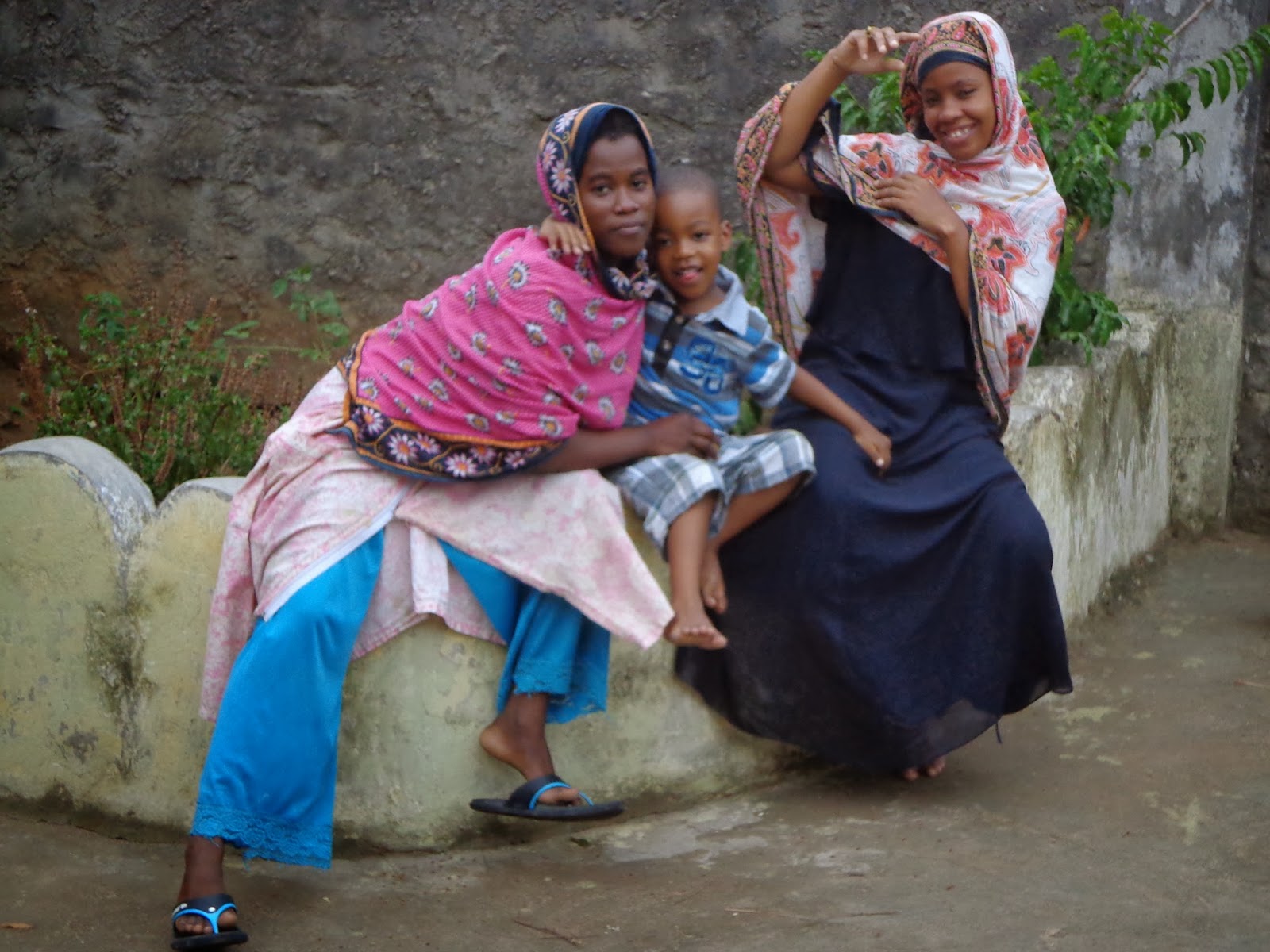
A host mother


No doubt there are many nuances and unique traits in the behavior of Swahili women that I have not noticed, but I now know better than to overlay my western stereotype of male dominated and docile females on them.   If their black bouibouis indicate submission and suppression, that message has not been inculcated into these women's psyches.  They might verbally agree with the conservative Christian view that a man is the head of a woman, but they absolutely do not live subserviently  in their daily lives.  I place them far ahead of many American women in their entrepreneurial drive, personal independence, and social assertiveness.  They are definitely bodacious!

Tuesday, February 25, 2014

Bombs Away

There are so many wonderful events and experiences that I still have not written about that it's irking that I must write something about bombs.  However, yesterday afternoon, there were two bomb blasts at popular tourist sites in Stone Town, which is the cultural heart of Zanzibar City.  John and I took a daladala into town around 3:30 p.m. but were prevented from walking down the street we wanted to by yellow crime scene tape stretched across its entrance.  We thought perhaps there had been a serious car-pedestrian accident or maybe even an attempted robbery.  No one told us what had really happened.  So, we took a detour and thought nothing more of it until we returned to the house and received text messages from Zanzibarian friends asking if we were okay.

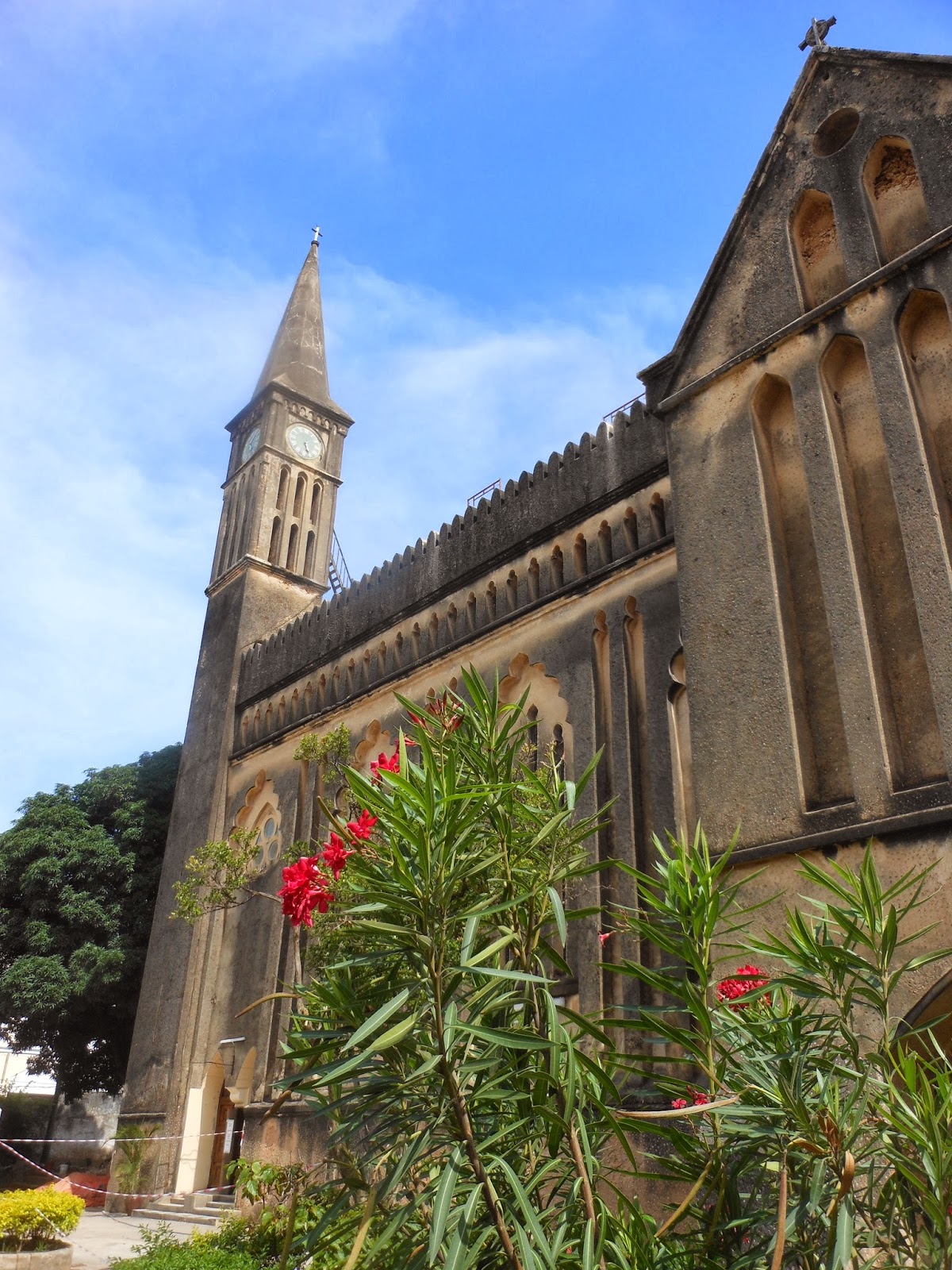
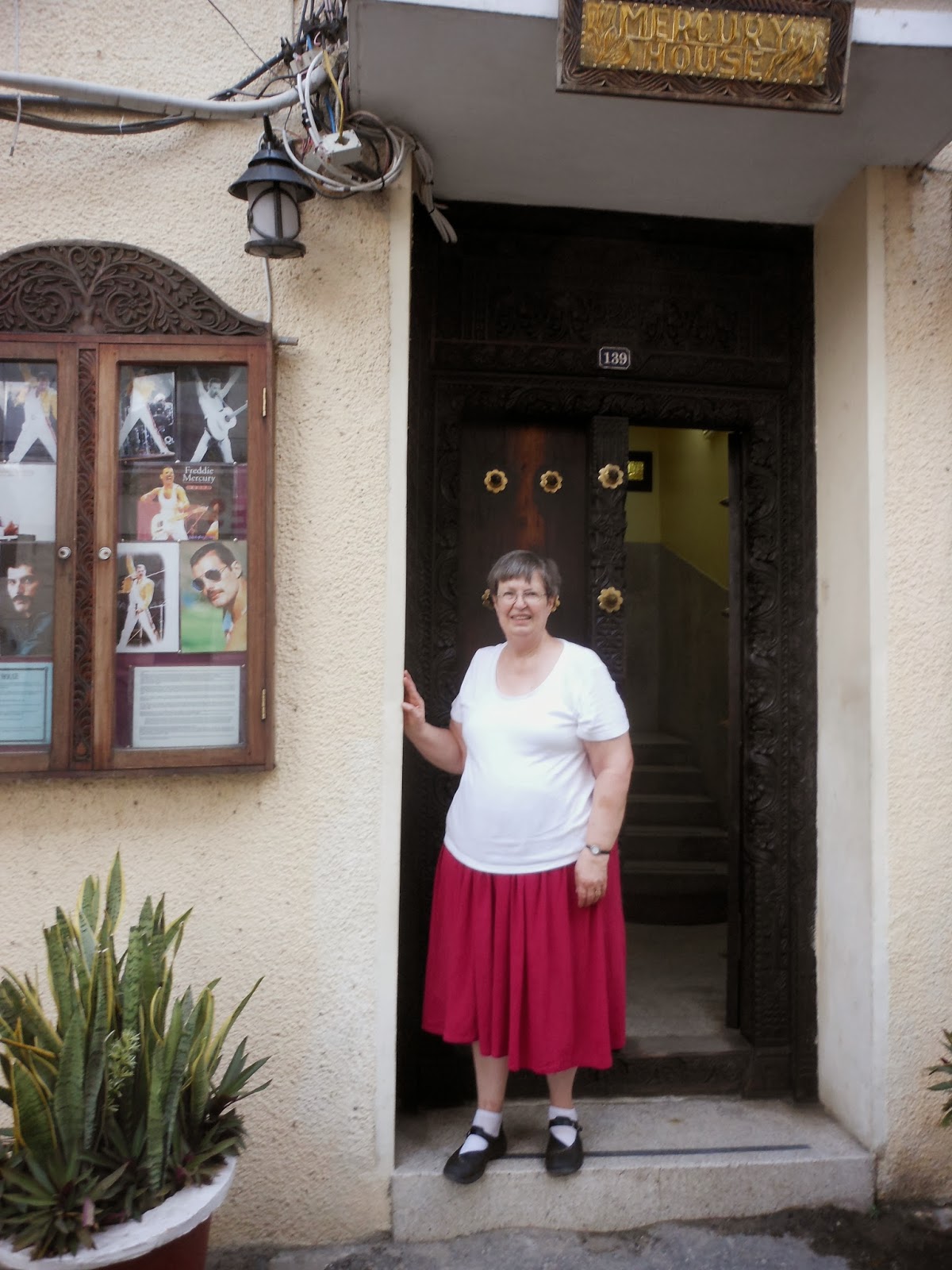
I quickly checked for local news and found that around 2:30, a bomb had gone off at the entrance of the Anglican cathedral and another at Mercury's, a famous bar for tourists who remember Freddy Mercury.  Neither bomb was very large and no one seems to have been injured--except perhaps one person at Mercury's, and that hasn't been verified. Whoever is behind these bombings doesn't seem sophisticated enough in technique to be part of any larger group of dissidents, and the government and local police will handle this with great zeal.  Tourism is the economic life blood of Zanzibar, and only a very few zealots would do anything to harm that source of jobs and income.
The Anglican cathedral, which is built on the site of the old slave market.

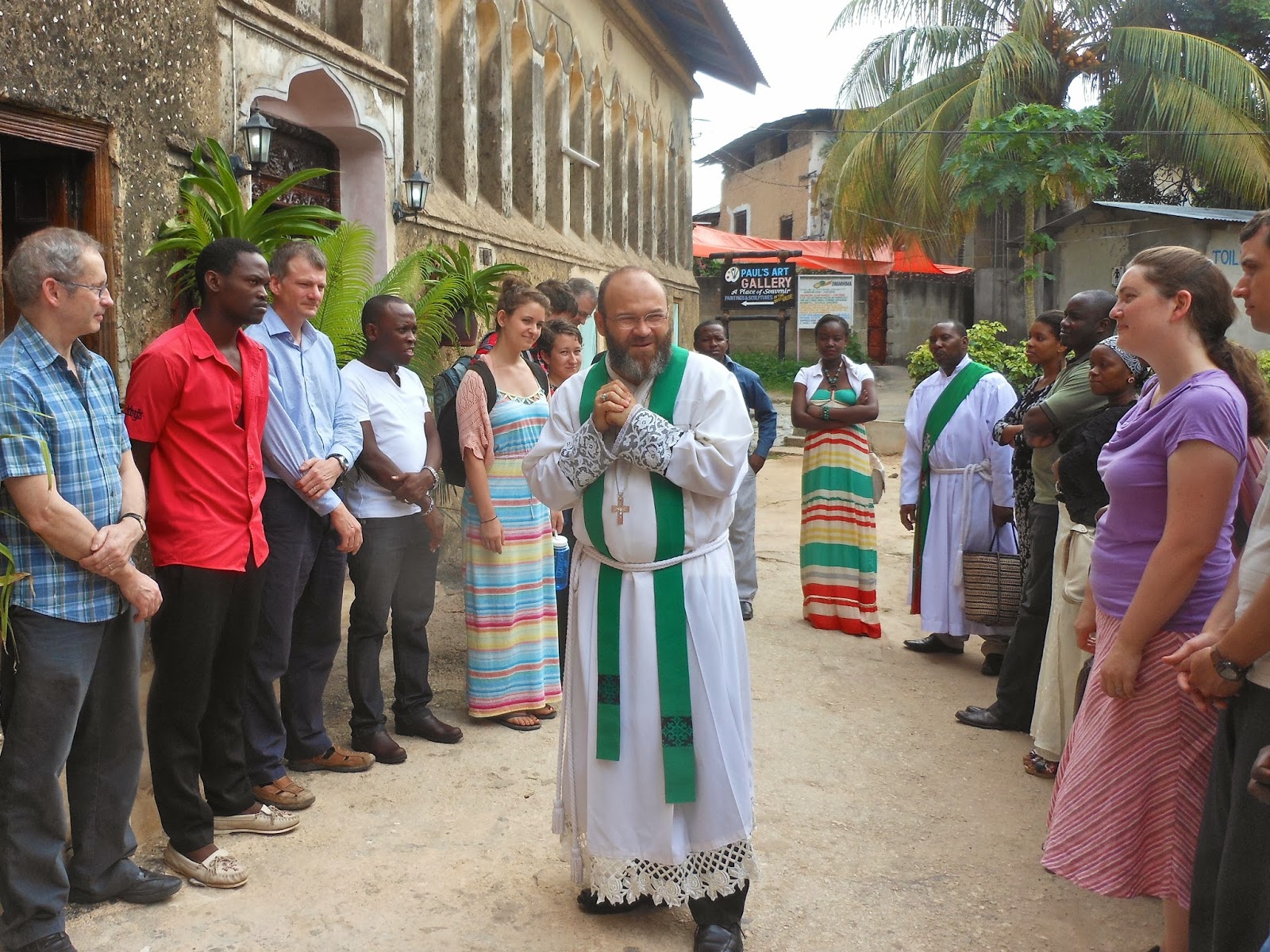
The circle of friendship we form after services for the benediction
Freddy Mercury's house
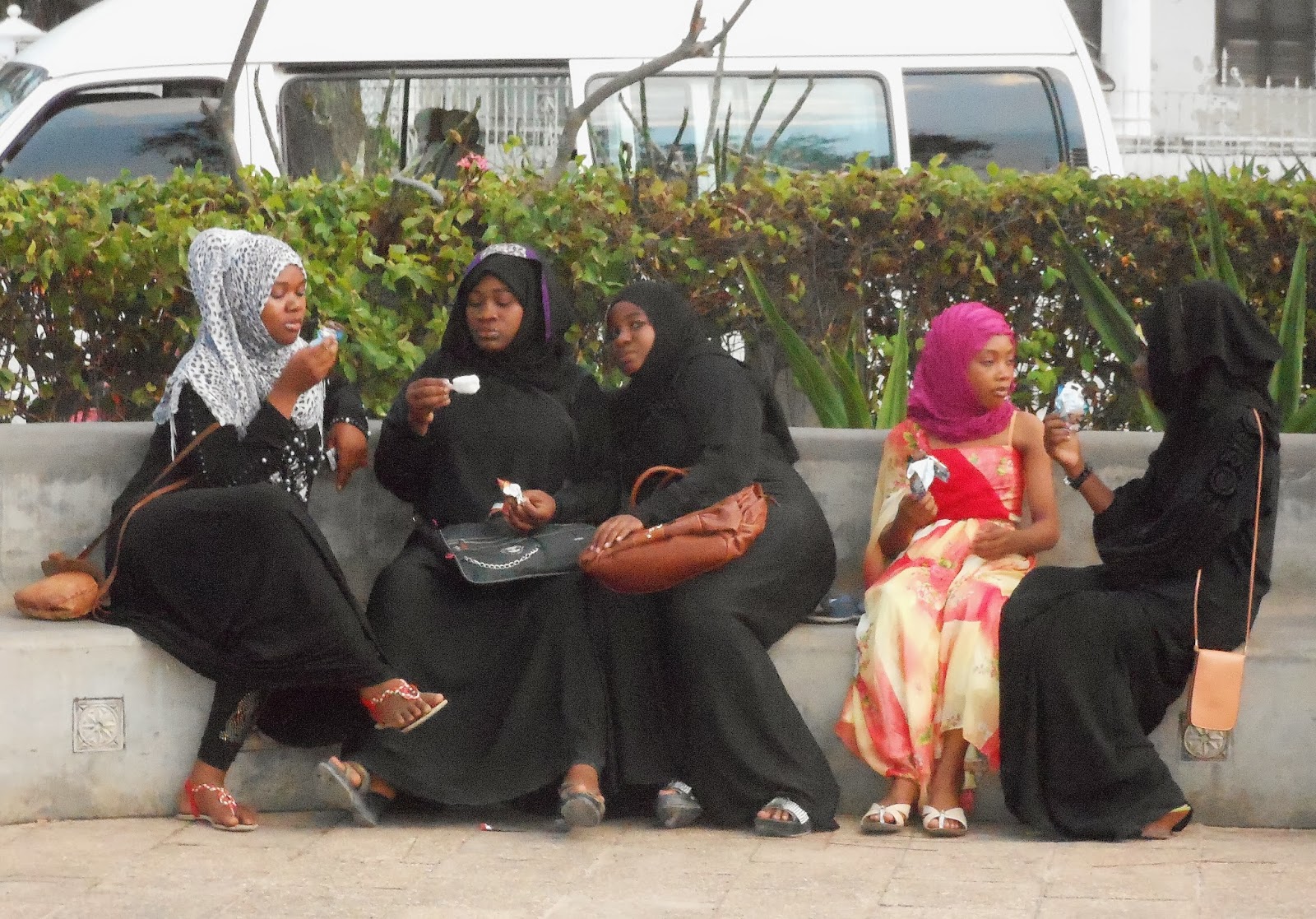
As I have noted in other posts, the Tanzanians as a whole are respectful, and very open and honest.  Even though they may be offended by the careless and often sluttish way many western tourists dress, they tolerate the behavior and remain very polite. There is no other reminder of how sexualized our western female dress code has become as graphic as seeing white tourists in short shorts and tank tops next to the elegantly robed Muslim women.  We may think that wearing a bouiboui is repressive--and in this heat I think it must be--but the women here dress with a style and elegance that puts us to shame. I wish that it weren't rude to take photos of the people I see on the streets, as I would love to have a collection of the parade of beauty I see each day.
Two female members of SUZA's faculty

Young women at Forodhani Park

At the construction site of the monument to the revolution

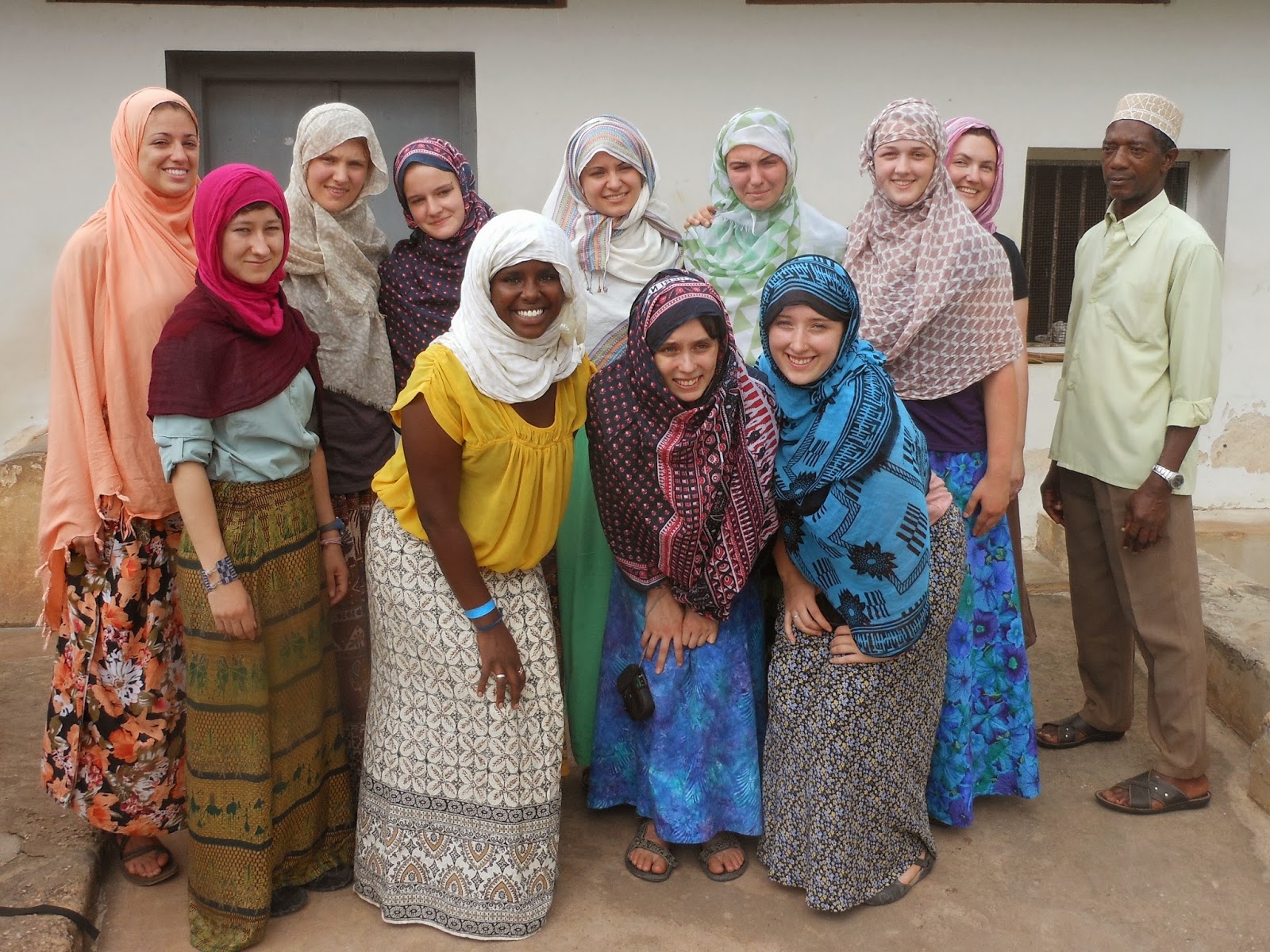
Our female students ready to enter a mosque
But, back to the bombings and a bit of history.  If you are as old as I am, you may remember a country called Tanganyika.  This is usually referred to as "the mainland" now since Zanzibar joined the United Republic of Tanzania after a bloody revolution in 1964.  However, in this union, Zanzibar still remains largely autonomous with its own parliament, president, and laws.  And, unlike the mainland, Zanzibar is about 99% Muslim with its own unique culture.  However, there are those who resent that Christians from the mainland have moved onto Zanzibar and who would like to secede from the union (This reminds me of some of the blustery conservatives in Texas), and, even though only a minority supports such an idea, this issue is currently being debated in the Zanzibar parliament.  So, most likely the bombings were a political statement more than an anti-westerner one: the Cathedral is a symbol of Christian intrusion, and the owner of Mercury's has been very outspoken against the idea of secession.  Realistically, the splinter group arguing for secession is fighting a losing battle, as this island is economically tied to the mainland in many ways that cannot practically be broken.  For example, all the electrical power comes from the mainland via underwater cable, and many families rely on mainland employment to support their families on the island. This is why Hamad is only at home on the weekends.

So, I am not in the least bit fearful being out and about as usual.  This morning, the people on the daladalas were as polite and helpful as always. The taxi driver I had for a jaunt to get my hair cut was very talkative and made a point of telling me that everyone loves wagaini (outsiders).  And, Fadhila is just plain pissed that anyone would do such a stupid thing.  And, you know when I put it all into a larger perspective, I have to recognize that I have a much greater chance of being shot and killed by the Spokane police than I do of being injured or killed by a bomber here on Zanzibar. This is not a crazy, violence prone society with a high number of gun owners and stand-your-ground laws.


Monday, February 24, 2014

What to Do with Dadas

I had decided that after a busy weekend, I wanted to be lazy this morning and sleep in until 8:30 or 9:00.  However, as soon as John left, sometime just after 7:00, Habiba, the youngest dada, stood outside our window and called, "Janet, Janet. Janet," over and over.  Why?  I didn't respond and eventually she stopped calling.  But, this is just one example of many, many dada behaviors which make me feel uncomfortable and cause me to wonder if I will ever get the African house help relationship and expectations figured out correctly.

This is an issue I have struggled with since my very first days in the Congo.  There seemed to be absolutely no reason for John and I to employ house help.  We were young and perfectly able to do our own cleaning, laundry, marketing, and cooking.  Other older, more experienced expatriates chided us because according to them, we looked selfish to the Congolese who needed employment and knew that we could afford to give someone a job.  So, we gave in and hired Jacques, a young man from an orohanage, who needed an entry level job so he could eventually advance to something better.  At age 22, I didn't yet know how to cook, and I was a failure as a domestic arts trainer and spent a good deal of time either avoiding Jacques because I didn't know what to have him do or cleaning up after him because he cooked like hell and burned a lot of food. Buying rice in the market and doing the laundry were perhaps his two best skills, but I knew when we left Kinshasa that poor Jacques had not gotten the training he would have from someone more comfortable with a servant.

It was similar in Liberia, though I knew enough to hire help immediately, and this time we took on 18-year-old twins, Joseph and Josephine, who needed to earn money for school fees.  They came each afternoon, and usually I had Josephine do laundry and marketing for us.  She loved it when I gave her money for a taxi (10 cents) and the market.  She also cooked jollof rice for us.  John kept Joseph busy by having him run errands and oversee such things as repairing bike inner tubes.  I did better with the twins than I had with Jacques, but still I was uncomfortable sitting and reading while Josephine did laundry or cooked, and I'd lie awake at night trying to think of things I could possibly have her do.

Bukasa, our houseman the second time we were in the Congo, knew absolutely nothing about "white" housekeeping and would have driven me to drink if there had been any liquor other than homemade palm wine within 100 miles.  Bukasa raised sandstorms when he swept the house, so I had to stay outside during the action and wait until the dust settled before re-entering the house.  But, he was incredibly proud of his position and did the laundry near the village path so he could chat with anyone who passed by.  Wisely, I never introduced him to cooking, though he did start charcoal fires for me when I used the babula, and he knew exactly how to skin the haunch of wild boar I bought from the local hunters.  He was always good humored and eager to help, and I still miss him.

Here at Fahdilas, there are three dadas who do absolutely all the cleaning, laundry and cooking since Fahdila is now completely consumed with the opening of her new restaurant, "The Executive Chef."
Compared with our last visit here in 2012, the quality and variety of food we are served have greatly declined, and while Fahdila is away, the dadas do pretty much what they want to--and they definitely want to do less work than they should.  Instead, they want to have me be their entertainment.  I cannot sit in the breezier outer rooms or they will come and lean over my shoulder to see what is happening on my computer or even my Kindle.  When my computer is on, they beg me to show them pictures.  Every time they enter a room where I am, they greet me and try to give me Swahili lessons.  And, when like this morning, I stay in our room, they knock at the door and call me to sit on the veranda or have some juice or tell me that the water is now cold or bring me a mandazi or ask about John, whom they know is at school every morning.  While I don't want to be rude, I also wish I knew how to set a stricter boundary on how they treat me.  They observe John and I playing with the children and thus realize that we are very different than the usual Zanzibarian adult, but apparently they do not sense that our relationship with the children does not transfer exactly to them.
Two dadas with Shehe
 Growing up as a Mennonite, I was taught that we are all equal in God's sight and that no one is above doing hard work and service to others.  Mennonites had hired girls and hired men who assisted with large families and farms, and though they took directions from the home owners or farmers, they were not considered as lower in class or status.  In fact, they often became college professors, nurses, teachers etc. as anyone else would.  "Help" was exactly that: help, not servitude.  Also, any Mennonite hired help had been raised with a strict work ethic and sense of service to others, so very rarely would they need to be corrected or chided about their work.  None of this is true for the dadas here.  They are very poor, untrained village girls, who are definitely low status and expected to work 7 days a week, from early morning to late at night. Fahdila is considered to be a good employer, but her method of supervising is yelling and stomping about, behavior I cannot duplicate.  When Fahdila is in the house, the dadas stay busy or else and pretty much leave me alone.  However, during the long hours when Fahdila is at her restaurant, the dadas cut loose and pester me constantly.  Should I, too, yell?  Learn Swahili for "Go away"?  Try not to be so American and smile less?  Pretend I've gone deaf?  WWYD?

Sunday, February 23, 2014

Daladala Etiquette

It always surprises me when something I have observed hundreds of times finally impresses me with what it actually is.  I have ridden on matatus in Kenya and the daladalas (same thing, different names) here in Zanzibar City many, many times and always appreciated the politeness I experienced from both the touts and my fellow passengers.  I have always hoped the kindness shown to me as I hoist myself up into the minivan is in deference to my age, not my white face.  But, one never knows for sure.  Except, here on Zanzibar Island, I honestly believe it is much more the former than the latter.
Daladalas lined up to go.

We take daladala 507 Samaki (Fish) going into or returning from the city center, so the touts always recognize us as we wait by the side of our street for a ride.  Almost always we are the only wazungu on the dala, which I enjoy, as I like the natural, loose interaction of the other passengers.  Then, I began to notice the general respect and care people showed one another.  The touts, whose job it is to solicit as many riders as possible and thus up the revenue for their drivers, always show patience with the slow boarding and alighting of the older passengers, often helping them by carrying their larger bags on or off the dala.  Likewise, when a mother with a small child boards, the tout will usually lift the child in to a passenger to hold until the mother gets seated and can hold the child herself.  I have never seen a mother, child, or passenger protest--it's just expected.  And, though the legal passenger limit for a dala is 18, it's not unusual for 22 or 25 to be crammed in, especially when schools let out and students, who ride at a discount, crowd in.  Yet, I have never heard anyone complain about the crush. I myself have been so tightly squished that I expected to exit at least a foot taller and a foot thinner around my middle.  Still, everyone remains calm and pleasant, with occasional jokes about the situation.  It's civility at its best in the push of daily life.

Which leads me to comment on how erroneously so many Americans picture life in a Muslim culture.  There is not only a huge ignorance of Islam itself, but an equally large failure to understand that Islam and Muslim life is as varied as Christianity.  I, as a Christian, certainly resent when I am summarily categorized with those I view as right-wing whackos, whom I believe distort the Gospel for their own self interests.  And, so it must be for Zanzibarians, who are not all uniform either, but seem very uniformly honest, respectful, and open in their interactions with each other and with outsiders such as I.  This is the only place I have been in Africa--and I have been in 12 African countries so far--where I feel perfectly safe at all times in all places and never even hesitate to hand my bag to a tout or fellow passenger as I board or exit a dala.  It is wonderfully refreshing when I pause and think about the meaning of such civility, a civility I do not see elsewhere, not even in my own country anymore.

Wednesday, February 19, 2014

A Valentine's Day to Remember

When I was a child growing up in Oregon, the saying "When it rains, it pours" never made much sense to me.  I didn't even own an umbrella until I left for college, and my mother, who had grown up in Ohio, insisted I take one with me.  Once I arrived in the Midwest, I learned all about thunderstorms and torrential downpours that rendered windshield wipers useless. Still, the rains we have been having off and on for over a week now amaze me with their ferocity.  The black clouds roll in from the ocean, and water pours down like thousands of miniature waterfalls.  Everything and everyone is instantly soaked, and the streets run with muddy streams full of debris.

For Valentine's Day, John planned to take me downtown to an ultra-nice restaurant as a treat.  First though, I wanted to visit the one air-conditioned "supermarket" I know about because I wanted to find a comb for wazungu hair.  I had looked at all the street vendors who sold hair products and accessories and had asked at many of the Asian shops as well with no success at all.  But, I thought there was a slight chance that Shamshu's would have one--after all they offer Betty Crocker cake mixes for sale.  So, we walked from the daladala stop to the big Darajani market and behind the fish market, past piles of octopus for sale, and finally reached the store. It, however, was closed for 4:00 prayers, so we waited until the men poured back out of the mosque and the store reopened.  I was relieved that there was an acceptable comb for my ultra-straight hair, even though it was not at all fine-toothed.  Who would have thought that in a city of as many as 400,000 one would have such a hard time finding a western type comb?
A nice pile of octopi and some fish on the side
As we returned from the little alleys to the main street, we saw a massive black curtain of clouds coming swiftly in from the coast, so we walked as quickly as we could toward the nearest taxi area.  Just as we got to the first taxi, it began to pour, so we jumped inside and John asked the driver to take us to Amore Mio, a trendy place right on the beach where they serve all sorts of ice cream concoctions. It was only after we were on our way that I saw that the cab was totally beat up and barely holding together.  The rain was pouring in both side windows, and, worse yet, in through the back window and down my back.  Soon, I was completely soaked and sitting in my own private pond.  John was just hoping that the cab would hold together until we got to our destination.

When we arrived at Amore Mio, I jumped out and got to the covered veranda as quickly as I could.  Then, I saw that no one was there and water was standing on all of the tables and benches.  After a minute or so, a visibly stunned waitress appeared to ask what we wanted, and when John said we wanted menus, she disappeared and returned with two men who literally squeegeed off a table,  two small benches, and a square of floor for us. I was not feeling the least bit romantic or thrilled about being wet, but I had to admit, the situation was unexpected and unique, two things I love in any surprise or gift.  So, I settled down and ordered a coffee shake, while John got a dish of chocolate ice cream.  By the time we had finished with our Valentine's special, the rain had stopped, and we were able to walk to another taxi area to get a ride home--in a nice, dry car this time.

The children were wild with delight to see us because I had hinted that Valentine's Day was very special.  I gave each of the girls a big Valentine's card and a Little Golden Book, and Shehe another Hot Wheel's car (That's one toy he cannot instantly destroy). Then, I surprised the three dadas by giving each of them a semi-gaudy enameled and glass-jeweled brooch I had also bought at the store where I found my comb.  They, too, were delighted, but I realized by the order in which they chose their brooches--oldest going first--that I should have gone all out blazing gaudy in my choices.  Apparently, one can never have too much gold or glitter on Zanzibar.

As we peeled off our clothes for another cold shower at bedtime, I thought about the fact that not once since we arrived on this island have I felt truly dry.  Our clothes are so damp with sweat that by day's end it's a struggle to get them off.  When the dadas bring back our washed clothes, things are still quite damp, and I have to hang shirts, underwear, and socks on hangers so the fan can help dry them better.  When I take clothes out of my drawer in the morning, everything feels moist and clammy.  There is no true dry here, so getting drenched on Valentine's Day was just a more intense Zanzibar experience than usual.